



This 2-day event is hybrid (both in-person and online). To register for the online version, please click here. To register for the in-person version, click here.
_________
Self-compassion helps us let go of identification with the belief that we’re not good enough. With its warm support, we learn to untangle from our negative thoughts and emotions and embrace our inherent wholeness.
Our unconscious conditioning – influenced by our family, genetics, and culture – often tells us we’re inadequate and need to be different to be happy. Compassion helps us remember who we truly are versus who we’ve been conditioned to be. It transforms our contracted and limited view of ourselves, opening to a larger, more connected and powerful sense of loving presence.
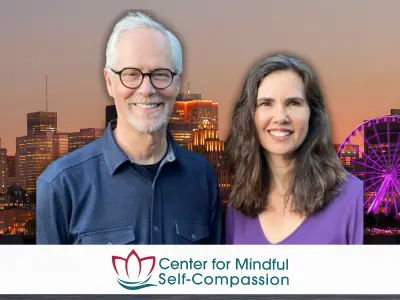
Research shows that self-compassion is strongly linked to psychological and physical health, but our conditioning works against being kind to ourselves. In this program, researcher Kristin Neff teams up with meditation teacher Caverly Morgan to explore self-compassion from a scientific and contemplative lens, so that we can respond to difficult moments with greater warmth and perspective.
Learning objectives:
- Identify the three key components of self-compassion
- Describe key research that supports the benefits of self-compassion
- Explain how family, cultural and genetic conditioning inhibits self-compassion
- Utilize short practices to increase self-compassion in everyday life
- Apply compassion practices when needed to regulate difficult emotions
- Explain how mindful presence supports self-compassion by promoting present-moment awareness and reducing emotional reactivity, allowing for a more compassionate response to suffering
- Use contemplative techniques to transform identification with a limited self-view